Telehandler vs Forklift vs Crane: An Abu Dhabi Guide
How to choose between a telehandler, a forklift, and a mobile crane based on load, height, reach, and ground conditions on Abu Dhabi sites.
The three machines overlap: all of them lift loads. But each is built for a different combination of weight, height, reach, and ground. Choosing the right one can save a crane day, or keep a forklift off ground it can't handle. Here is how to decide.
Forklift: Heavy Loads, Low Height, Firm Ground
A forklift lifts vertically, close to the ground, and is the most efficient way to move pallets and heavy items around a warehouse or a paved yard. Standard forklifts need firm, level ground. On loose sand or rough plots they lose traction and stability. Choose a forklift for warehouses in ICAD, KIZAD, and Mafraq, for truck and container loading, and for any work on concrete.
Telehandler: Height and Forward Reach on Rough Ground
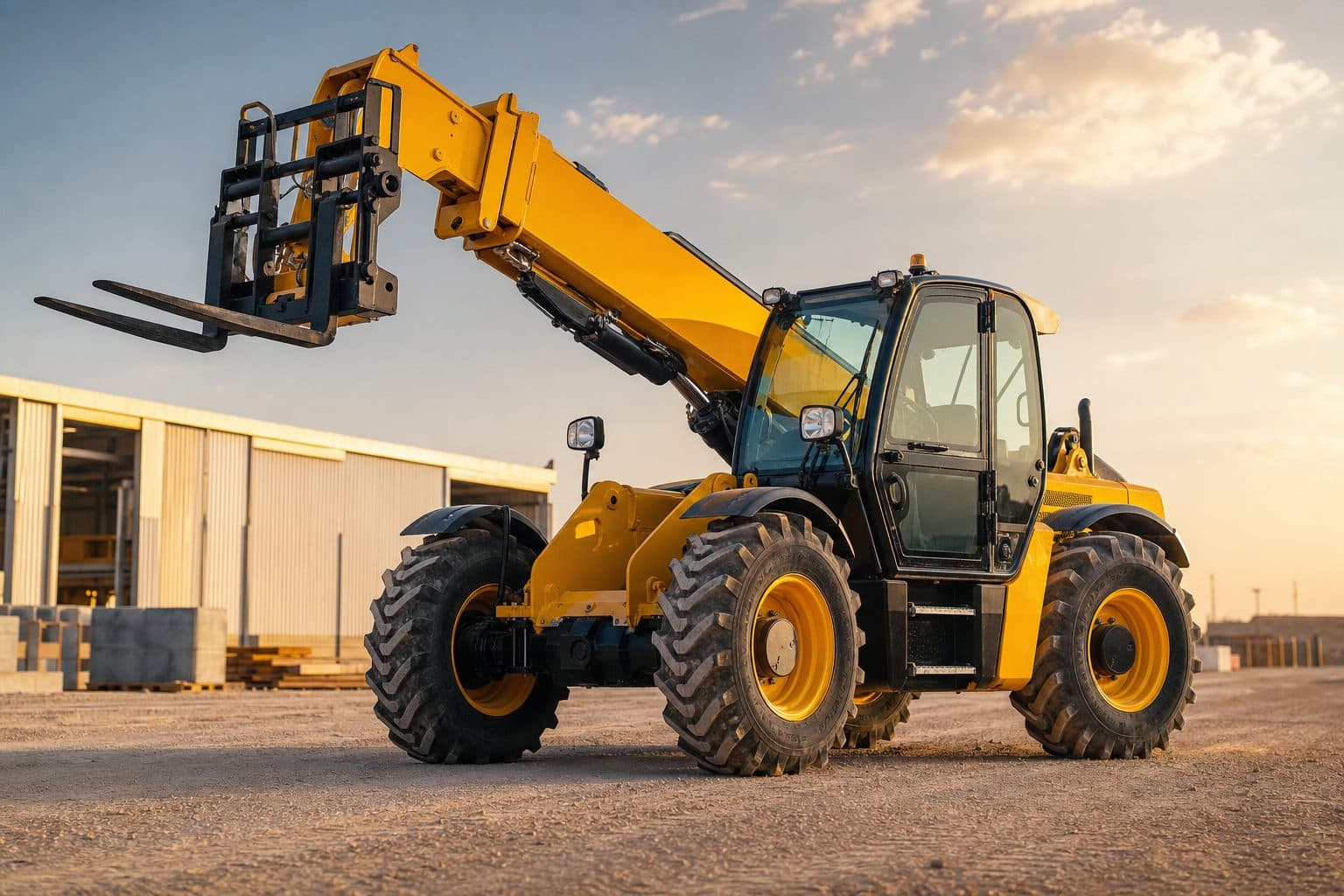
A telehandler has a telescopic boom that reaches up and forward, typically 7 to 17 m. With four-wheel drive and rough-terrain tyres, it works on unfinished plots and sand. It can place blocks on a roof, lift steel to a second floor, or unload a truck from across a trench. With a bucket, jib, or man-basket attachment it does several jobs. This is why villa sites in Al Shamkha, Riyadh City, and Khalifa City rely on it.
The limit is capacity at reach. A telehandler rated at 4 tons lifts far less with the boom fully extended. Always check the load chart at the actual radius and height you need.
Mobile Crane: Heavy Loads at Height and Distance
When the load is heavy and needs to go high or far, such as precast panels, roof steel, plant, tanks, or machinery through a roof opening, a mobile crane is the tool. A crane lift needs more planning: a lift plan, a certified operator and rigger, an outrigger setup on firm ground or mats, and sometimes road or site permits. For a single heavy lift, one crane day is usually cheaper than trying to force it with the wrong machine.
| Forklift | Telehandler | Mobile crane | |
|---|---|---|---|
| Typical capacity | 3–25 ton | 3–10 ton (less at full reach) | 25–500 ton |
| Lift height / reach | Low, 3–6 m mast | 7–17 m, up and forward | Height and radius, set by load chart |
| Ground | Firm, level, paved | Rough, sand, unfinished plots | Firm pad or outrigger mats |
| Planning needed | Minimal | Minimal | Lift plan, certified rigger, sometimes permits |
| Best for | Pallets, containers, yards | Villa and site material placement | Heavy or high single lifts |
A Quick Decision Guide
- ✓Pallets on concrete, low height → forklift
- ✓Long steel, pipe, or timber in a yard → side loader forklift
- ✓Material to a roof or upper floor, rough ground, repeated daily → telehandler
- ✓Occasional heavy lift or a load beyond the telehandler's chart at your radius → mobile crane
- ✓Heavy machinery into a building → crane or heavy forklift, decided at a site survey
Common Mistakes on Abu Dhabi Sites
- ✓Using a warehouse forklift on a sandy villa plot: slow, unstable, and hard on the machine
- ✓Reading a telehandler's maximum capacity instead of its capacity at the working radius
- ✓Hiring a crane for weeks for loads a telehandler could place, or the reverse
- ✓Forgetting that a crane needs space and firm ground for its outriggers
If you're unsure, send us the heaviest load, the height and distance it has to travel, and a photo of the site. We will recommend the machine that does the job at the lowest total cost, which sometimes means a telehandler for the programme plus a crane for one day.
Related Pages
Need Equipment for Your Next Project?
Talk to our team for a fast quote on forklifts, mobile cranes, telehandlers, or man lifts anywhere in the UAE.
Request a Quote on WhatsApp